

Our brains weren’t designed to multitask because of the strain and added energy required. The nature of physician work is just that… multitasking… all day and every day. The CMA recently reported a 30% burnout rate amongst Canadian physicians. Digital multitasking is one factor contributing to this high burnout rate.
With the endless digital distractions around us, our threshold for stimulation rises. As we take on more and more, we are becoming increasingly dissociated from what we’re actually getting done. Did you know that the more you multitask, the more productive you think you are, but are actually not? For physicians, lower productivity translates to fewer patients seen.
Paul Mohapel shared tidbits from his extensive research into the fields of psychology and neurology to outline the detriments of multitasking and digital distractions on our brain health, productivity and ability to connect and empathize with others. Thankfully he also shared some practical strategies on managing digital distractions that can be used in both work and personal settings:
- Limit time on email
- Close all unnecessary applications or use blocking software
- Take regular breaks
- Leave your mobile device behind, or shut off
- Have a scheduled time to disconnect each day
- Keep your work at work
- Spend time outdoors
You can read more on each of these strategies here.
Paul illustrated thinking versus doing and the states that intersect them. For example, high doing and high thinking is goal-directed behavior whereas low doing and low thinking is what Paul refers to as “space” (not to be mistaken for rest!). Can you see which states are recharging and which are draining?
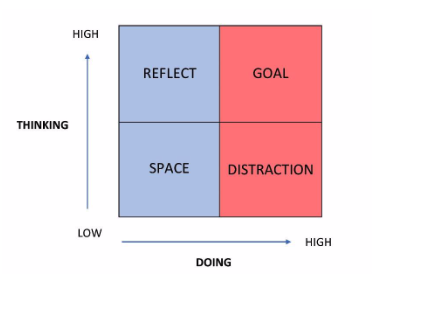
The “space” state is a great place for meditation or mindfulness practice. Paul closed the workshop with a 3-minute meditation called the “ABC” breathing space:
Awareness
Breath
Consciously expanding
You can find Paul’s list of recommended resources here, with an additional recommendation being a book by Kristin Neff titled “Self-Compassion”. This book, according to Paul, is essential for physicians, as they are most likely to not practice self-compassion but are most in need of it in order to prevent burnout.
Physician participants left with an appetite to learn more about mindfulness. “An excellent resource to ensure that I got the right balance between work and ‘life’,” said one physician.
Paul Mohapel received his doctorate in psychology from the University of Victoria then worked as a neuroscience researcher at Lund University Hospital in Sweden, before returning to Canada to pursue a master’s in leadership and training at Royal Roads University. He is currently a faculty member for the CMA’s leadership training program and speaks extensively on individual and organization emotional intelligence enhancement, leadership development, talent management and team effectiveness.